
'The announcement has come too late. This should have been done years ago.'

India's first auction of 5G spectrum, that powers ultra-high data speeds, is currently underway with a total of 72 GHz (gigahertz) of radiowaves worth at least Rs 4.3 lakh crore up for bidding. Billionaire Mukesh Ambani's Reliance Jio, Sunil Mittal-led Bharti Airtel, Vodafone Idea and a unit of billionaire Gautam Adani's flagship Adani Enterprises are in the race to bid for 5G spectrum, that offers speeds about 10 times faster than 4G, lag-free connectivity, and can enable billions of connected devices to share data in real-time. In addition to powering ultra-low latency connections, which allow downloading full-length high-quality video or movie to a mobile device in a matter of seconds (even in crowded areas), Fifth Generation or 5G would enable solutions such as e-health, connected vehicles, more-immersive augmented reality and metaverse experiences, life-saving use cases, and advanced mobile cloud gaming among others.

After Vodafone Idea, Tata Teleservices (Maharashtra) on Tuesday said it will opt for conversion of the interest amount on AGR dues into equity and post conversion, the government's holding in the company is expected to be around 9.5 per cent. The announcement of Tata Teleservices (Maharashtra) came within hours of Voda Idea also deciding to opt for converting the interest amount on AGR dues into government equity. In a filing to the BSE, Tata Teleservices (Maharashtra) said Net Present Value or NPV of interest is expected to be nearly Rs 850 crore as per the company's estimates, subject to confirmation by the Department of Telecom (DoT).

The government is looking at a time frame within the first two weeks of July to kick off and complete the upcoming 5G auctions, according to discussions between officials and stakeholders. It is expected that the Telecom Regulatory Authority of India (TRAI) will give its recommendations on the base price by March, after which the necessary cabinet clearances will be given. The Department of Telecommunications (DoT) had earlier looked at undertaking the auction in the first quarter of 2022 but decided to push it back. Communications Minister Ashwini Vaishnaw had also said that the auctions are likely to take place in April-May.

If the apex court decides on a 15-year repayment tenure, it would pose a grave challenge for the debt ridden VIL.

Vodafone Idea Ltd (VIL) CEO Ravinder Takkar did some plain speaking. In an analyst call after its quarterly results recently, Takkar said that the main stumbling block to raising fresh capital from investors is "pricing" - telecom tariffs, in other words. Nine months ago, the telecom company's board had cleared a proposal for raising Rs 25,000 crore from investors, after the promoters made it clear that they were not ready to pump in more money. But potential investors are concerned that without clarity on tariff hikes (there have been none for more than 18 months) they might just lose their money. The lack of visibility on raising tariffs has also impelled VIL to request the Department of Telecom (DoT) for a fresh reprieve by extending the two-year moratorium on paying its spectrum instalment of Rs 8,200 crore for another year till FY23.

The move comes a few days after billionaire businessman Elon Musk tweeted that his Starlink internet services would be available in India as soon as it gets regulatory approvals next year. Musk's Starlink, which plans to have a constellation of 40,000 low-orbit satellites, recently started offering high-speed internet in the US as part of its beta launch phase.

The department for promotion of industry and internal trade (DPIIT) has suggested to the home ministry to allow limited activity in certain sectors such as heavy electricals and telecom equipment with reasonable safeguards. In a letter to Home Secretary Ajay Kumar Bhalla, the department said that these activities are essential to improve the economic situation and provide liquidity in the hands of the people.

"Delhi Police had requested the IT ministry to block two download links and the entire We Transfer website immediately. Following which orders were issued to the website and links suggested by the Delhi Police," an official source told PTI.
Now BSNL customers will be able to make calls using the company's mobile app 'Wings' to any phone number in the country.

Bidding for the sixth round of spectrum auction for radiowaves worth Rs 3.92 lakh crore will start from March 1, according to a notice issued by the Department of Telecom on Wednesday. The long-awaited spectrum auction is being held after a gap of four years and over two years after the Telecom Regulatory Authority of India (Trai) calculated and recommended base price for the radiowaves. The DoT has fixed January 12 for the pre-bid conference and January 28 as the last date for seeking clarification to the notice.

The proposal may provide relief to the tune of Rs 9,000 crore to service providers.

Banks do extensive investigation before declaring an account fraud; they owe it to us as they deal with our money. Why would they try to fix an innocent borrower? asks Tamal Bandyopadhyay.

Midcap stocks continued to remain on buyers' radar with BSE Midcap index up 0.1%.

The company at present provides monthly mobile services at starting price of Rs 24 without data, and plans with data service starts from Rs 33 onward. It did not disclose the quantum of hike.

The report has revealed that BSNL, which contributed around 98 per cent to the financial irregularities, failed to pay a government loan amounting to Rs 7,500 crore (Rs 75 billion) in spite of having adequate cash reserves in short-term deposits with other banks during the year 2005-06 and 2006-07.

The policy was part of the Aatmanirbhar Bharat package announced by Sitharaman in May 2020 as a coherent policy where all sectors would be opened for private sector participation.

Vagela could not have reached this position if Narendra Modi, who'd known him from his chief minister days, had not backed the choice.

7 key areas that the Budget must address to re-energise the infrastructure sector, suggests Vinayak Chatterjee.

Britain's Cairn Energy Plc has dropped lawsuits against the Indian government and its entities in the US and other places and is in the final stages of withdrawing cases in Paris and the Netherlands to get back about Rs 7,900 crore that were collected from it to enforce a retrospective tax demand. As part of the settlement reached with the government to the seven-year old dispute over levy of back taxes, the company - which is now known as Capricorn Energy PLC - has initiated proceedings to withdraw lawsuits it had filed in several jurisdictions to enforce an international arbitration award which had overturned levy of Rs 10,247 crore retrospective taxes and ordered India to refund the money already collected. Two sources with direct knowledge of the matter said Cairn on November 26 withdrew the lawsuit it had brought in Mauritius for recognition of the arbitration award and took similar measures in courts in Singapore, the UK and Canada.

China on Thursday played down what appeared to be a tense conversation between President Xi Jinping and Canadian Prime Minister Justin Trudeau on the sidelines of the G20 summit a day earlier, saying the conversation is "candid, normal" and should not be interpreted as criticism or threat.
.jpg)
Moving quickly towards ending a retrospective tax dispute with a firm that gave India its largest oilfield, the government has accepted Cairn Energy PLC's undertakings which would allow for the refund of taxes, sources said. Meeting the requirements of the new legislation that scraps levy of retrospective taxation, the company had earlier this month given required undertakings indemnifying the Indian government against future claims as well as agreeing to drop any legal proceedings anywhere in the world. The government has now accepted this and issued Cairn a so-called Form-II, committing to refund the tax collected to enforce the retrospective tax demand, two sources with direct knowledge of the development said.

The board will now be headed by Vinod Kumar Yadav as chairman and CEO, and it will have four other members.

If it fails, the services will be stopped from March 1.

Vodafone's operating loss from India business jumped to 692 million euros in April-September from 133 million euros in the same period last year.

During his first Union Budget in July 2014, former finance minister Arun Jaitley announced the setting up of an institution called 3P India, with an allocation of Rs 500 crore. The intention was to mainstream public-private partnerships (PPPs) in India. The plan was to bring together the capacities of the government and private sector to push PPP projects.

India Inc on Thursday pitched for continuation of reforms while ensuring tax and policy stability in the forthcoming Budget to prop up the economy hit hard by the COVID-19 pandemic. In the virtual pre-Budget consultation held with Finance Minister Nirmala Sitharaman, industry chambers said that government measures will help firmly entrench the nascent signs of recovery being currently seen in private investment. Capital expenditure by the government through enhanced infrastructure spending should in the meantime continue to support growth, CII president TV Narendran said.

Microsoft has become the first global Big Tech company to join the Open Network for Digital Commerce (ONDC), an Indian government initiative for developing a first-of-its-kind open network for digital commerce. The world's second-largest technology firm intends to introduce social e-commerce via its app in the Indian market later this year. ONDC is expected to open to the public in Bengaluru over the next fortnight as it enters into the next phase of the pilot for further fine-tuning before rollouts in other cities, according to a source in the know.

The Indian Navy has expressed reservations in vacating 100 Mhz of the spectrum, proposed to be sold in the tender expected next year, sources said. This could delay the Centre's plans to proceed with the 5G auctions in 2022. A department of telecom (DoT) official said, "The Indian Navy is showing reluctance in vacating the spectrum from the 3.3 GHz-3.4 GHz band that it is using. "Unless there is some traction with them on this issue, we can't seek consultation from TRAI." The 3300 MHz-3600 MHz (or 3.3GHz-3.6GHz) will be auctioned for the first time in the proposed 5G auctions, likely next year.

Availability of Wi-Fi is also expected to provide local airlines an additional source of revenues amid stiff competition in the fast growing Indian aviation market.
Just to promote govt's policy of Make in India, BSNL said, it cannot afford to procure sub-standard equipment from inexperienced companies, not having proven technology. BSNL complained that when competitors were procuring world-class 4G equipment from experienced vendors, why should BSNL be compelled to procure locally.

All existing emergency numbers will be phased out within a year of rolling out 112, depending upon the awareness about this new facility.

Delay due to rise in operating cost of telcos, late adoption of 4G network

The latest move, even if it is symbolic, is the first rate hike after the one announced end of 2019.

Nivedita Mookerji explains why a timely rollout of 5G may not be easy in India.
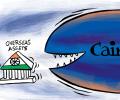
Faced with prospect of its assets across the globe being seized just like Pakistan and Venezuela, the government decided to scrap retrospective taxation but the international embarrassment could have been avoided had 'attached' shares of Britain's Cairn Energy Plc not been sold, according to tax and legal experts. On Thursday, the government introduced a Bill in Parliament to scrap the tax rule that gave the tax department power to go 50 years back and slap capital gains levies wherever ownership had changed hands overseas but business assets were in India. The 2012 legislation was used to levy a cumulative of Rs 1.10 lakh crore of tax on 17 entities, including UK telecom giant Vodafone, but substantial punitive action was taken only in the case of Cairn.

The approval comes few days before the company has to clear statutory liabilities of up to nearly Rs 35,586 crore, of which Rs 21,682 crore is licence fee and another Rs 13,904.01 crore is spectrum dues.

Now, telcos will be penalised for call drops.

Processes are at an advanced stage for a number of assets of the Centre and central public sector enterprises (CPSEs) to be monetised. The assets include office space, apartments, factories, land, power transmission assets, sports stadia, gas pipelines, and telecom assets.
The levy of retrospective tax on the UK's Cairn Energy Plc is a tale of bizarre twists and turns that saw its attached shares being sold in May 2018 amid the passing of the baton from a full-time finance minister to interim one and the talks at the highest level to resolve the dispute, to claims that levy of back taxes was a result of an investigation into Panama Papers leak. The government late last month refunded about Rs 7,900 crore it had collected from selling residual shares of the British firm in its erstwhile India unit, seizing dividend and withholding tax refunds, to settle an eight-year-old dispute that had tarred the country's reputation as an investment destination. But, this did not come about easily. For seven years, the establishment vehemently justified in courts and outside seeking of Rs 10,247 crore in back taxes plus interest and penalty from a firm that gave India its biggest onshore oil discovery.
